Camera & Rigging · 5 min read
Sony FX5 on Festival Stages: 5K Open Gate & Triple Base ISO
Field notes on the Sony FX5 for festival stages: 5K 3:2 Open Gate for 16:9 and 9:16 deliverables, Triple Base ISO (800/4000/12800), strobe readout, and Resolve grading.

Eric StaffOfficial FestivalLUTs staff. Only the people who run this site carry this badge.
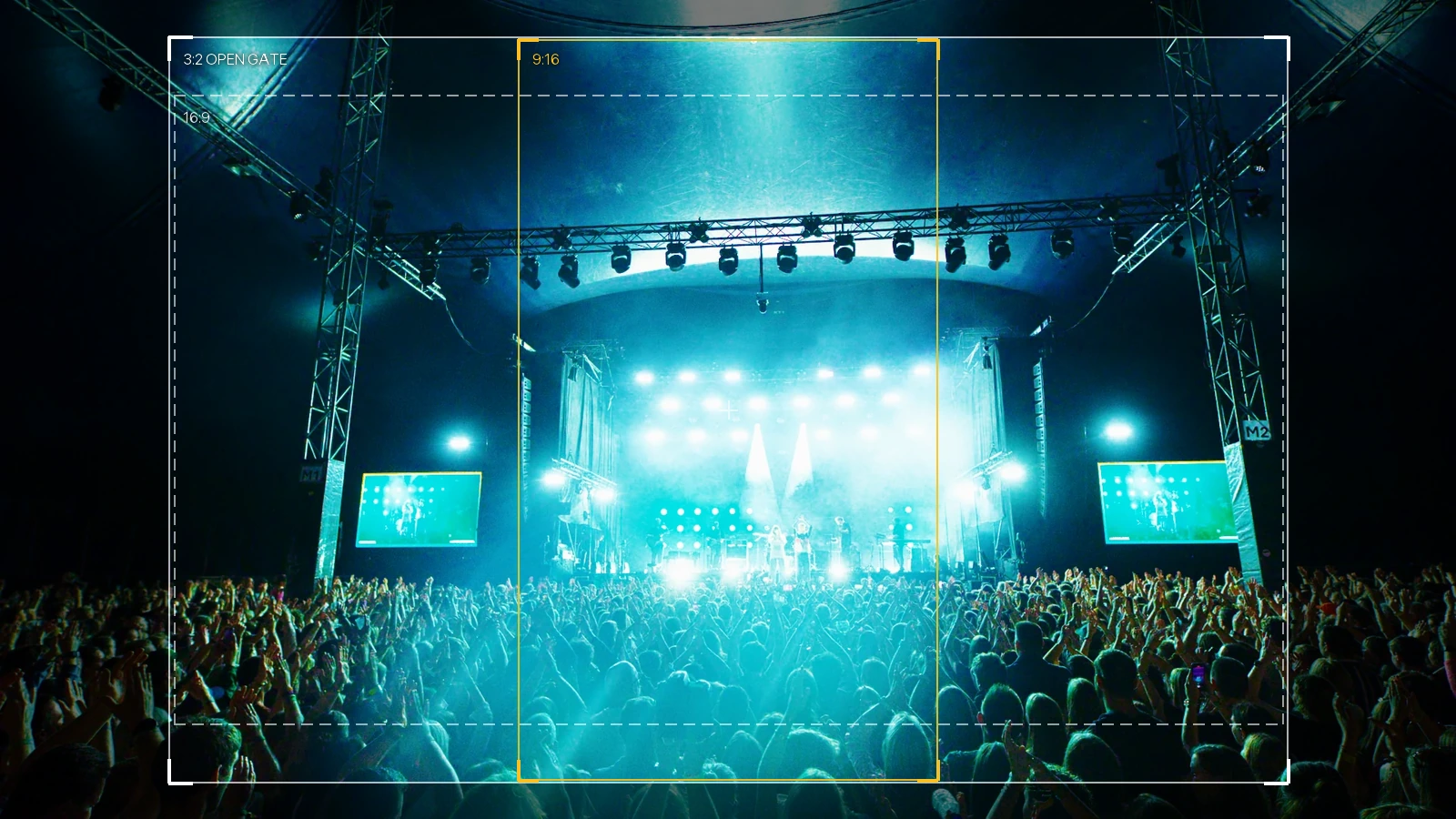
Modern festival media crews rarely shoot for a single screen shape. Almost every weekend booking requires a 16:9 aftermovie master alongside rapid 9:16 vertical reels for DJs, promoters, and stage recaps — usually filmed by the same operator standing in the same tight booth.
The Sony FX5 (16.6 MP stacked full-frame Exmor RS sensor, 5K 3:2 Open Gate, Triple Base ISO 800 / 4,000 / 12,800, and internal 16-bit X-OCN) targets the exact friction points that slow down compact festival rigs. Here is how those features actually play out across a full festival day, and where an FX3 or FX6 still makes more sense.
1. 5K 3:2 Open Gate for 16:9 and 9:16 deliverables
When you shoot conventional 16:9 and punch into a 9:16 vertical frame in post, you discard roughly two-thirds of the horizontal sensor width and lose vertical breathing room above the stage lighting rig. Worse, zooming 178% into high-ISO night footage magnifies shadow noise and turns crisp truss silhouettes soft on mobile screens.
Shooting full-height 5K 3:2 Open Gate (4992 × 3328 up to 60 fps) fixes the framing compromise cleanly:
- Dual-aspect framing guides: Keep the DJ, vocalist, or front-row hero centered inside 9:16 vertical markers while allowing wide stage wings, LED screens, and pyro cannons to fill the 16:9 horizon.
- Higher vertical pixel density: A vertical crop pulled from full 3328-pixel sensor height stays sharp without upscaling — critical when night crowd scenes sit at ISO 4,000 or 12,800.
- Leaner booth footprint: One operator covers both horizontal aftermovie plates and vertical artist reels from tight stage corners where two rigs simply will not fit.
2. Triple Base ISO (800 / 4,000 / 12,800) across dusk-to-night shifts
The trickiest 45 minutes of any outdoor festival happen between sunset and full dark. Ambient sky drops four stops while the stage lighting desk runs at partial output before the headliner cue.
On Dual Base ISO bodies like the FX3 and FX6 (800 and 12,800 in S-Log3), that transition leaves an awkward four-stop gap: ISO 800 underexposes dark crowd shadows into muddy noise, while jumping straight to ISO 12,800 clips bright LED screens unless you stack heavy ND.
Adding a middle native base at ISO 4,000 bridges the sunset and club-tent zone cleanly:
| Stage condition | Recommended native base (S-Log3) | Exposure target note |
|---|---|---|
| Bright daytime outdoor mainstage | ISO 800 + variable ND | Place 18% middle gray near 41.06% IRE (+0.7 to +1.0 stop on clean skin) |
| Dusk transition, dimly lit club, house tent | ISO 4,000 | Keeps shadow floor clean without slamming stage LED walls into clipping |
| Pitch-dark arena, unlit crowd, back-of-booth | ISO 12,800 | Protect bright moving heads; avoid pushing +2 stops ETTR under strobes |
Never treat daylight "+2 stops ETTR" advice as a fixed rule on concert stages. Under bright LED panels and blinders, holding closer to +0.7 to +1.3 stops above 41.06% IRE preserves highlight texture while keeping shadow grain controlled. You can verify exact 18% gray, skin IRE, and highlight headroom stops in our Camera Log Exposure Calculator and Sony S-Log3 Wiki hub.
3. Faster stacked readout under 150 BPM strobes
Rapid strobe hits and fast whip-pans around DJ decks punish slower sensors with split-frame white bands (partial exposure bars across half the vertical frame) and leaning truss poles. The FX5's 16.6 MP fully stacked Exmor RS sensor reads out far faster than non-stacked full-frame bodies, shrinking strobe split artifacts significantly.
Fast readout does not eliminate LED wall PWM flicker, however. You still need to lock shutter speed to clean multiples of local mains power (1/50s or 1/100s on 50Hz grids; 1/60s or 1/120s on 60Hz grids) and inspect the wall at 1:1 zoom during soundcheck. See the Stage Lighting & Laser Survival Tool for quick shutter checks.
4. FX3 vs. FX5 vs. FX6 rigging trade-offs
| Need on site | Strongest fit | Practical reason |
|---|---|---|
| Tightest gimbal payload & compact booth rig | Sony FX3 | Lowest body weight, mature cage ecosystem, proven Dual Base 800 / 12,800 |
| Single-operator 16:9 + 9:16 + dusk base ISO | Sony FX5 | 5K 3:2 Open Gate, ISO 4,000 bridge base, internal 16-bit X-OCN latitude |
| Solo run-and-gun across fast sun-to-shade shifts | Sony FX6 | Built-in variable electronic ND saves constant front-filter swaps outdoors |
If your festival work is mostly daytime-to-sunset handheld with quick shade transitions, the FX6's internal electronic ND remains hard to beat. If you shoot mixed 16:9 + 9:16 deliverables from dark indoor arenas and sunset mainstages, the FX5's Open Gate framing and ISO 4,000 base remove two major daily compromises.
5. Grading 16-bit X-OCN and 10-bit S-Log3 in DaVinci Resolve
16-bit scene-linear X-OCN holds smoother roll-off in saturated blue/magenta stage washes than compressed 10-bit 4:2:2 XAVC — especially when pulling back clipped LED spill or matching cameras with the Multi-Camera Shoot Matcher. Keep your camera conversion strictly separate from your creative 65³ Rec.709 show look:
- Node 01 — Input CST: Sony S-Gamut3.Cine / S-Log3 (or Camera RAW decode to S-Gamut3.Cine / Linear → DaVinci Wide Gamut / Intermediate) with Gamut Mapping: Saturation Compression enabled to tame 450nm blue LED walls.
- Node 02 — Exposure & White Balance: Trim global offset and Kelvin across shots in DaVinci Wide Gamut so FX5, FX3, and FX6 clips match before display mapping.
- Node 03 — Shadow Chroma Clamp: Taper saturation gently below 12% IRE on ISO 12,800 crowd shots.
- Node 04 — Output CST: DaVinci Wide Gamut / Intermediate → Rec.709 / Gamma 2.4 (Tone Mapping: DaVinci, Saturation Compression on).
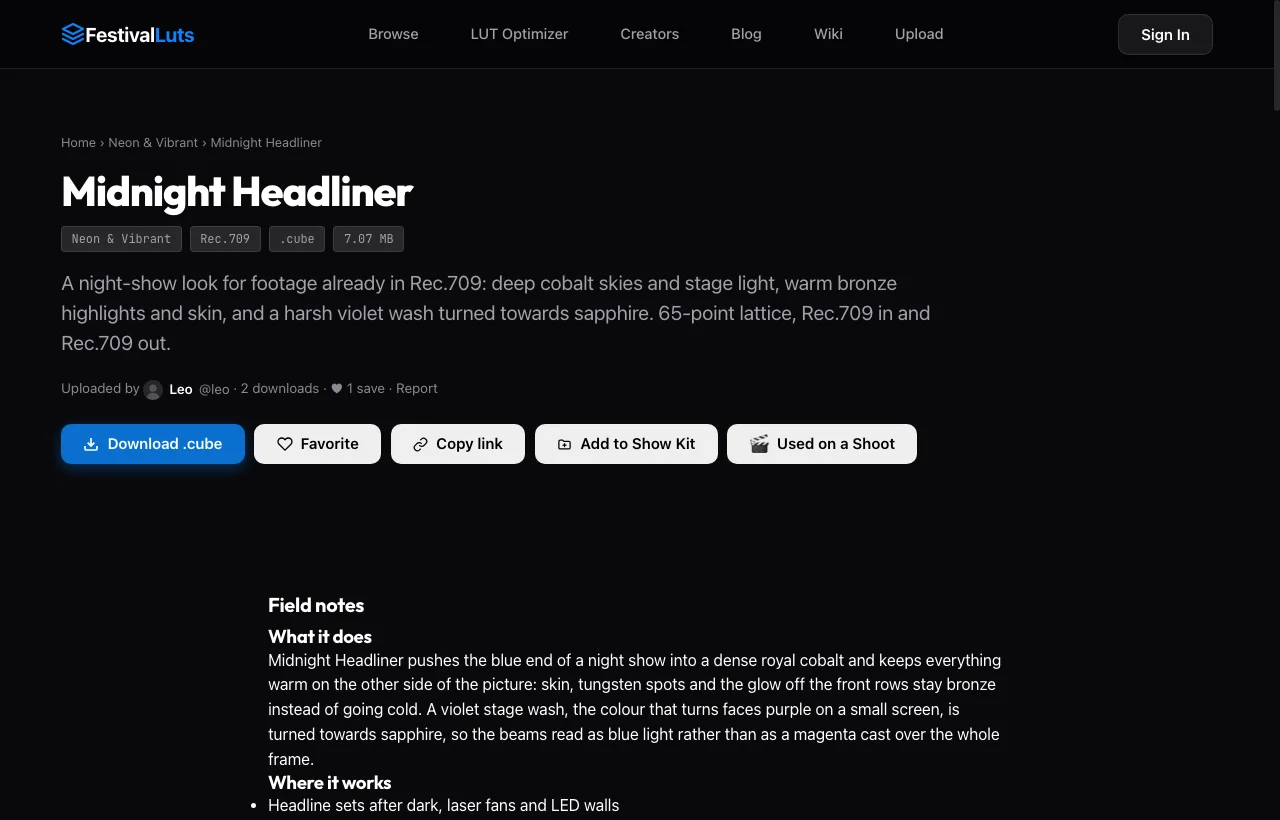
- Node 05 — 65³ Show Look (Rec.709): Apply your creative look downstream of the Output CST:
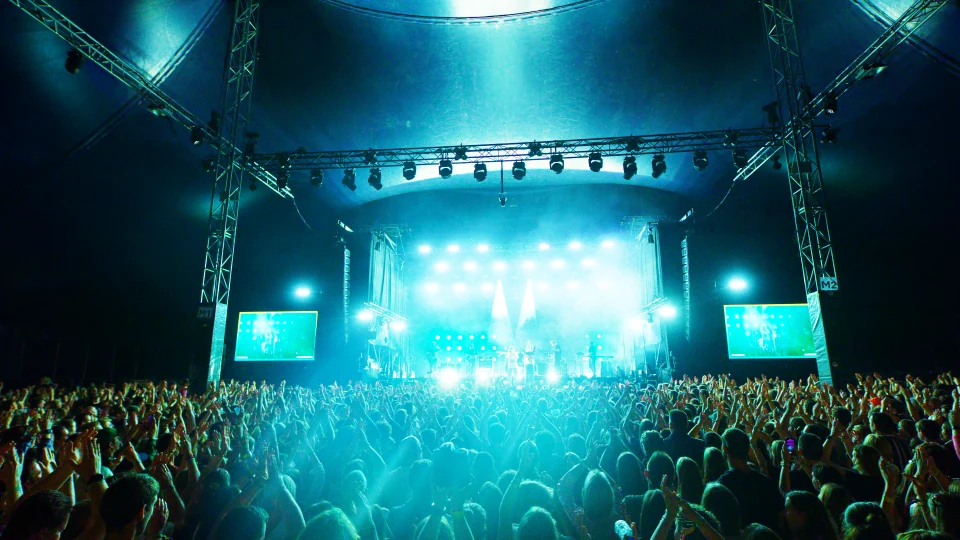
- Midnight Headliner for heavy blue/cyan LED stages.
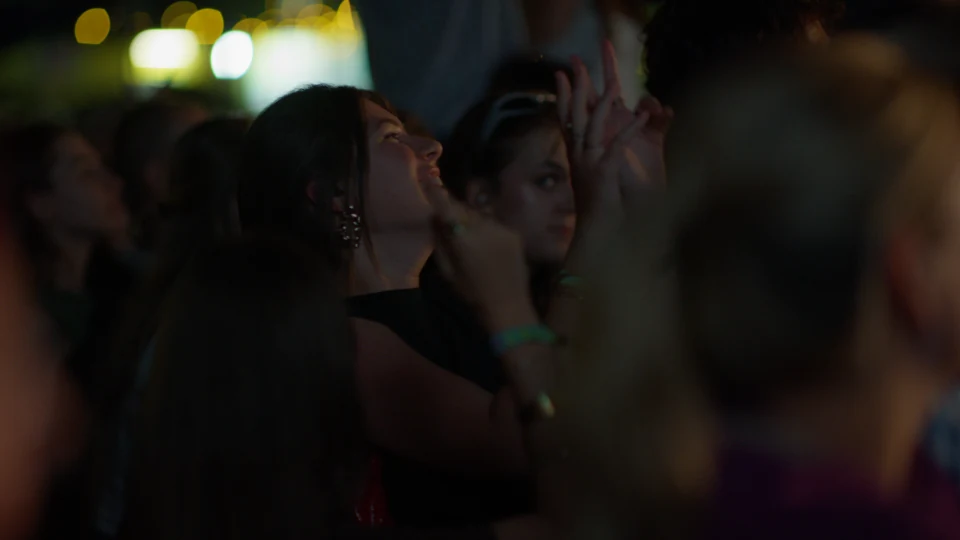
- Velvet Encore for dark club tents where shadows need controlled lift.
- Titanium Rig for crisp truss detail and neutral crowd tones.
6. Five checks before shooting a festival on FX5
- Turn on dual 16:9 + 9:16 aspect frame markers whenever shooting 5K 3:2 Open Gate.
- Anchor exposure around native bases (800 / 4,000 / 12,800) instead of parking between steps.
- Lock shutter to 50Hz or 60Hz mains multiples and verify against the mainstage LED wall at 1:1 zoom.
- Keep CFexpress Type A media budgets realistic when switching from 10-bit XAVC to 16-bit X-OCN LT.
- Apply 65³ Rec.709 creative LUTs strictly after your Output CST in DaVinci Resolve.
You can test any of these looks directly on your own S-Log3 frame inside the LUT Optimizer, inspect custom .cube files in the .cube Inspector, or check full FX3/FX5 notes in our Sony FX3 and FX5 Wiki guide.
-
Eric
@eric
Senior Festival DP & Lead MōVI Operator
Resident AuthorWrites for the FestivalLUTs blogEarned automatically from what is public on FestivalLUTs. Nobody can buy it or ask for it.2 LUTsShared 2 LUTs on FestivalLUTs.Earned automatically from what is public on FestivalLUTs. Nobody can buy it or ask for it.100 downloadsReached 100 downloads.Earned automatically from what is public on FestivalLUTs. Nobody can buy it or ask for it.StaffOfficial FestivalLUTs staff. Only the people who run this site carry this badge.
Join the discussion: share a setting that worked, or ask the crew.
Sign in to comment