Film Emulation Concert LUTs
The stock does not arrive. You apply one of these, the tone shifts, the hues move, and the footage still reads digital — because a .cube maps one colour to another colour and never sees the pixel next to the one it is working on. The half of a film image that is spatial is outside what any file here can do.
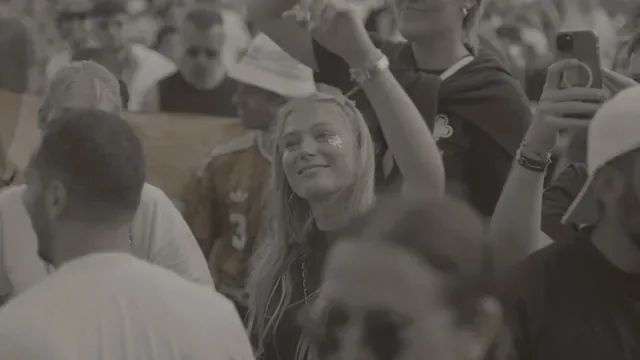
Warm 400 Film Standard
Warm colour-negative film emulation in the spirit of classic 400-speed portrait stock, adapted for festival day and night footage. Soft highlight compression, warm skin tones and rich midtones.
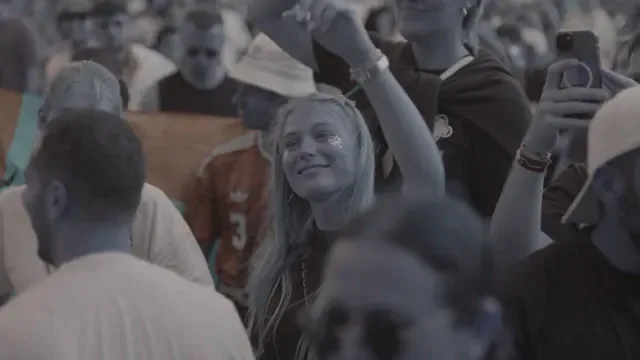
Vivid 50 Neon Stage
Ultra-rich colour saturation, deep blues, punchy greens and classic slide-film contrast for daytime stages and outdoor crowd shots.
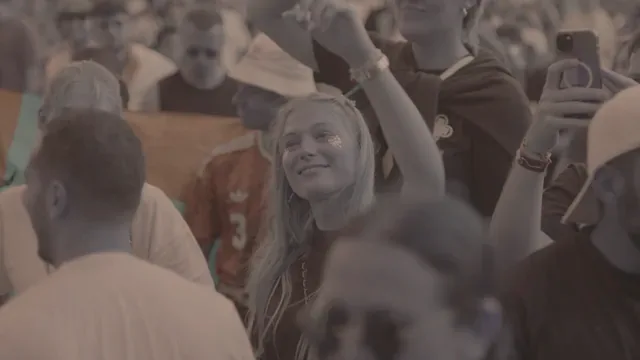
Underground Raw Analog
VHS / 16mm warm analog film emulation with subtle color bleed, warm tungsten tint, and intimate DJ booth atmosphere.
What a colour map can borrow from a stock, and what it cannot
Colour and tone are inside the format: where the shadows sit, how the highlights roll away, which hues move and how far. Grain, halation, gate weave and the way a blown highlight bleeds into what surrounds it are relationships between neighbouring pixels, and a colour-to-colour map has no neighbours to read.
What arrives is a tone curve and a set of hue shifts. If you want grain and halation you want a plugin or a scan, and nothing on this site will give you either.
Two different references hide under one word
Download two film looks and they will often disagree about everything, because two opposite references answer to the same word. One is print behaviour: a floor that never reaches black, a ceiling short of peak white, saturation coming off. The other is reversal behaviour: blacks taken to zero, contrast and saturation both going up, because a slide was projected as shot with no print stage to pull anything back.
Two rows on the file's page settle which one you are holding before you download it. Black point is printed in IRE, so a floor at 4 IRE is the first kind and 0 IRE is the second. Saturation is printed as a percentage against the input, so −6% is the first kind and +23% is the second. The word does not tell you which one you have. Those two numbers do.
Reach for the print end when the footage is already contrasty: a hard key against a black room, one lit body, nothing behind it. Reach for the reversal end in daylight on a crowd, where there is a whole frame worth of colour to push.
A print curve expects a finished image in front of it
These are built around a display-referred picture: black near 0, white near 100, midtones already where a viewer expects to find them. Feed one a log clip and the floor and ceiling it was shaped around land on parts of the picture they were never aimed at, and what you get is not a subtler version of the look but a different one. The conversion goes first, and what a log to Rec.709 conversion actually does is a guide of its own.
Browse every vibe: Clean & Natural · Cold & Desaturated · Dark & Moody · Film Emulation · Log → Rec.709 Conversion · Neon & Vibrant · Warm & Golden