Dark & Moody Concert LUTs
The room goes exactly where you wanted it, and so does the shoulder of the one person standing in the one source lighting them. This family buys a lit body against an empty room by compressing the bottom of the range, and footage shot in a dark venue is already living down there.
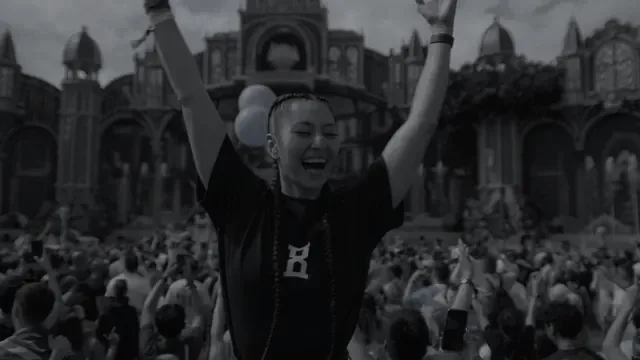
Warehouse Techno Vault
Dark industrial look with crushed deep blacks, metallic slate blue shadows, and high contrast for dark strobe-filled techno halls.
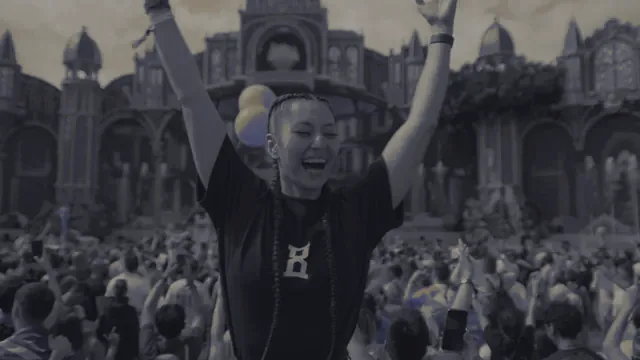
Warehouse Industrial Bass
Gritty warehouse aesthetics, deep indigo shadows, warm tungsten light beam contrast, and high midtone clarity for drum & bass raves.
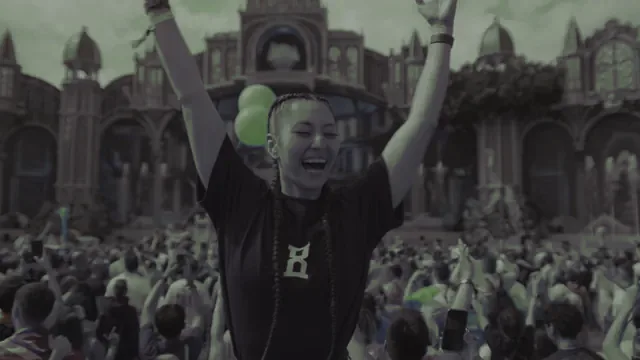
Heavy Riddim Bass
Aggressive toxic green & neon yellow accent punch with crushed blacks and heavy midtone contrast for dubstep & headbanger edits.
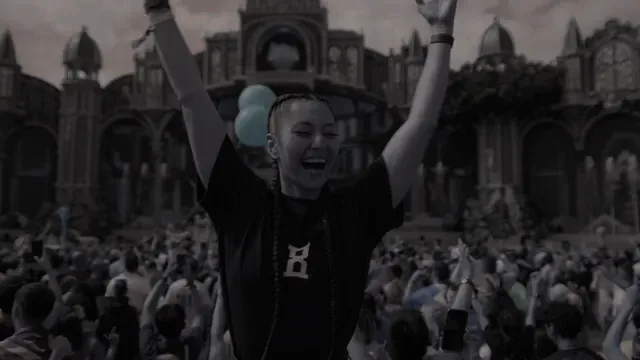
Hardcore Gabber Fire
Pitch-black shadow clamping, blazing fiery orange & yellow explosion highlights for maximum hardcore festival intensity.
The reading that tells you which files actually crush
Nearly every look on this site comes out flatter at the bottom of the range than the image that went in, so the word dark in a title tells you nothing about how far a particular file goes.
The file's own page will, in a sentence it prints only past a threshold: below 25% input the curve runs so many per cent flatter than it came in, so the darkest quarter of the range arrives compressed. Ten of the 179 .cube files that middleware/lutprofile.js could read in this site's uploads directory on 23 September 2026 clear that threshold, and seven of the ten run at half the original slope or less. That sentence is the thing to look for on this shelf. Where it appears, shadow values that were apart in camera are arriving close together, which shows up first on a large smooth dark area — haze falling away behind a booth, an unlit wall — because there are fewer steps left to cross it with. What the lattice under the file costs on a gradient is measured separately in what LUT lattice size actually costs.
When the frame already contains a black
One hard source on a subject and a room with nothing in it: a tunnel, a warehouse, a booth under a single wash. Compressing the bottom costs you nothing where there was nothing to begin with, and the lit part of the frame steps forward for free.
It fails on a wide, hazy, half-lit shot. There the bottom of the range is the atmosphere, and the atmosphere is the reason you framed it. Do not crush the thing that made the shot.
Fix it before the look, not after
Nothing downstream gives the bottom of the range back. Lift the shadows on a node after one of these and you spread back out exactly what the look just compressed, noise included, which is why a crushed grade has to start with shadows that arrived clean. That makes this a camera decision before it is a grading one, and the Academy’s exposure guides carry the per-format numbers.
Browse every vibe: Clean & Natural · Cold & Desaturated · Dark & Moody · Film Emulation · Log → Rec.709 Conversion · Neon & Vibrant · Warm & Golden